
Introduction
The most interesting thing about a fast-growing AI company list is no longer how many model labs it contains. It is how many different industries now have credible AI-native employers. A July 2026 ClawJobs analysis found 1,657 active openings across a curated cohort of 37 fast-growing technology companies, with jobs spanning GPU infrastructure, robotics, legal work, insurance, payments, compliance, cybersecurity, defense, and enterprise operations.
Infrastructure, robotics, and developer tools still formed the largest group at 43.2% of openings. The surprise was the next group: regulated and professional verticals accounted for 32.7%. Legal AI companies alone are no longer a small edge case. Legora had 264 active roles in the snapshot, while GC AI, Spektr, OpenFX, Corgi, Yuzu, and other domain-focused companies added dozens more.
The role mix tells a similar story. Engineering remains central, but these companies are also hiring people who can carry AI into production: forward deployed engineers, implementation managers, solutions engineers, customer teams, legal specialists, insurance operators, and infrastructure deployment leaders.
What This Snapshot Measures
ClawJobs used the 37-company cohort as a starting set, matched each employer to its official or hosted career board, and counted active listings on July 16, 2026. Thirty-two companies had active roles in the index. Five did not have active listings that ClawJobs could ingest at the time of the snapshot.
The 1,657 figure measures open job listings. It does not measure people already hired, net employee growth, or verified hiring over the preceding 90 days. A company can also publish one role in several locations, so the geography section reports location mentions rather than pretending each location is a separate job.
This is a concentrated cohort. Nscale had 297 openings and Legora had 264, so the two largest boards represented 33.9% of all indexed jobs. The five largest companies represented 50.8%. The segment totals are therefore useful signals about where expansion is occurring, not a census of the entire AI labor market.
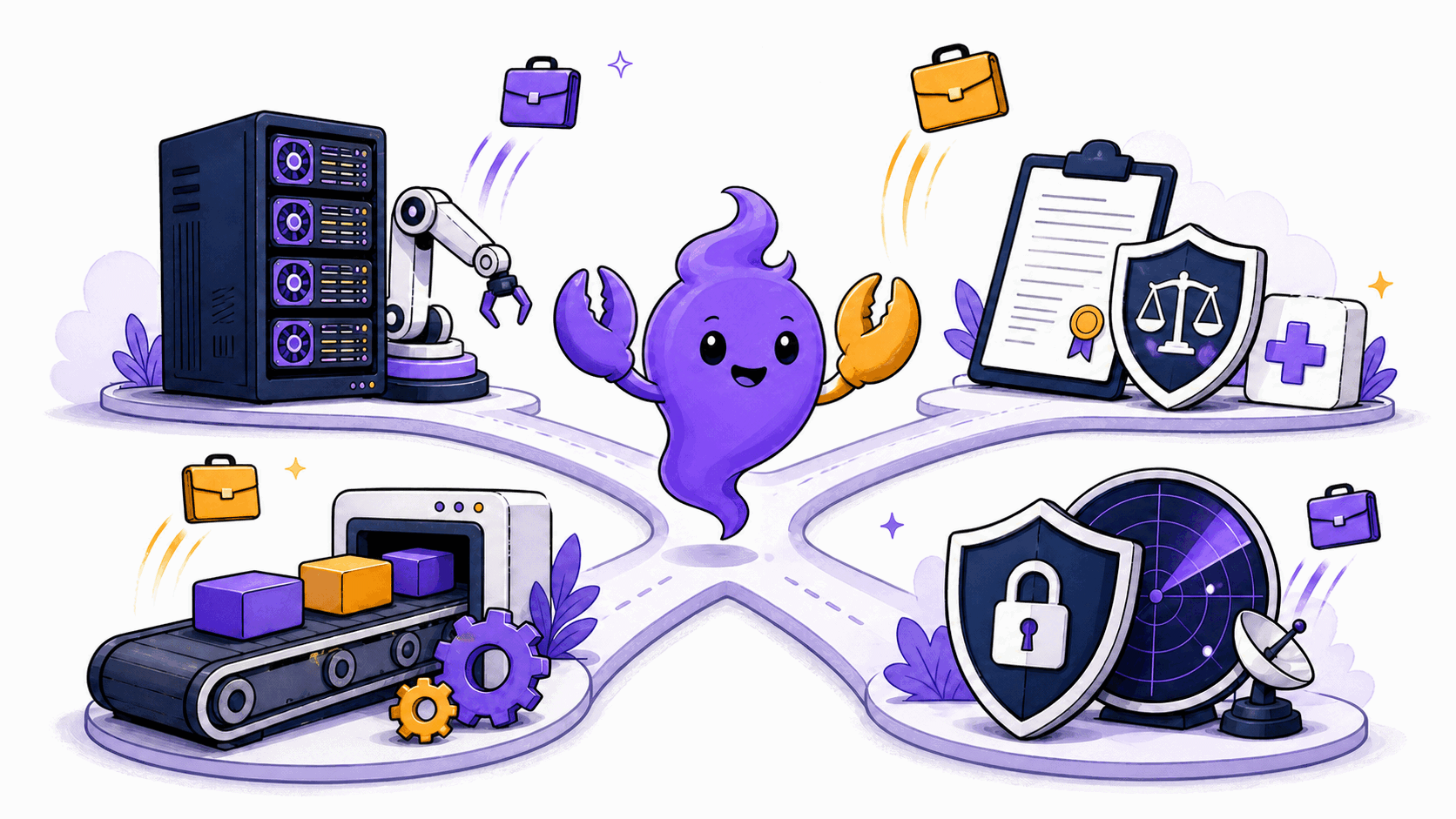
Four AI Markets Are Hiring at Once
Each company was assigned to one primary market so the four segments are mutually exclusive. That makes this table different from the overlapping filters in the earlier AI company segments update.
| Primary market | Jobs | Share | Company examples |
|---|---|---|---|
| AI infrastructure, robotics, and developer tools | 715 | 43.2% | Nscale, Cursor, Skild AI, Reflection AI, Inertia, Mecka AI |
| Regulated and professional verticals | 542 | 32.7% | Legora, GC AI, OpenFX, Corgi, Spektr, Yuzu |
| Enterprise AI workflow automation | 252 | 15.2% | Lio, Serval, Console, Conveo, Brain Co., Outset |
| AI security and defense | 148 | 8.9% | Allen Control Systems, NODA AI, XBOW, Gray Swan, Quartermaster |
Infrastructure is becoming an operating business
The 715 infrastructure, robotics, and developer-tool openings are not limited to model research. Nscale describes its mission as building an AI-native hyperscaler, and its official careers page spans systems engineering, data centers, networking, supply chain, deployment programs, product, and customer architecture. That breadth is what scaling physical AI infrastructure looks like: software jobs grow alongside energy, facilities, logistics, and field operations.
Domain expertise is becoming part of the product
The 542 regulated and professional openings show where generalized model capability meets industries with expensive errors and specialized workflows. Legora says it is building the operating system for legal work on its careers page. Its hiring includes engineers and product teams, but also legal engineers, enablement, partnerships, and market-specific growth. Similar patterns appear across compliance, insurance, payments, prediction markets, and customized health plans.
Security and defense remain smaller but specialized
Security and defense produced the smallest segment by job count, yet its employers cover unusually distinct problems: autonomous offensive security, AI application security, maritime monitoring, defense orchestration, and autonomous systems. Candidates should expect deeper screening around security judgment, systems reliability, government or regulated customers, and real-world operating constraints.
The Deployment Layer Is Becoming a Career Track
A mutually exclusive title classifier placed 617 roles in engineering and research, the largest named category. Another 286 were GTM and customer roles. Most revealingly, 92 listings explicitly referenced forward deployment, implementation, professional services, or solutions engineering.
Those deployment titles appeared at Cursor, Fundamental, Reflection AI, Lio, Mecka AI, Legora, Serval, Console, Harper, Gray Swan, and several other companies. Cursor's Forward Deployed Engineer role, for example, embeds with customer engineering teams to ship production-grade workflows and own them through launch and support. That is closer to product engineering plus consulting than conventional pre-sales.
The 433-role domain-specialist bucket reinforces the pattern, although it is deliberately broad. It contains titles that do not cleanly match standard engineering, product, GTM, or operations keywords. For candidates, the signal is not that coding matters less. It is that companies increasingly value people who can connect technical systems to a legal matter, insurance workflow, data-center rollout, security investigation, or customer deployment.
| Title-based role group | Jobs | Share |
|---|---|---|
| Engineering and research | 617 | 37.2% |
| Other and domain specialist | 433 | 26.1% |
| GTM and customer | 286 | 17.3% |
| Operations and people | 154 | 9.3% |
| Deployment and solutions | 92 | 5.6% |
| Product and design | 75 | 4.5% |
Role groups are a title-based ClawJobs heuristic. They are mutually exclusive and may differ from company departments.
AI Hiring Is Multi-Hub, Not Remote-First
San Francisco and New York were the two largest named hubs, with 338 and 273 location mentions. Europe is the other major center: London and the UK produced 138 mentions, while continental European hubs produced 136. Austin stands out for defense and physical systems, and India appears across robotics and software delivery.
Remote appeared in 101 location mentions across 15 companies, but it was not the dominant operating model. That fits the work being hired for. Data centers, robotics testing, defense systems, regulated customer deployments, and dense product teams often require time on site or close to customers.
| Hiring hub | Location mentions |
|---|---|
| San Francisco Bay Area | 338 |
| New York | 273 |
| London and the UK | 138 |
| Continental Europe | 136 |
| Remote | 101 |
| Austin and Texas | 97 |
| India | 55 |
| Toronto and Canada | 39 |
A listing can name multiple locations, so location mentions do not add up to the 1,657 unique active jobs.
What Candidates Should Do With This
The practical opportunity is to search by problem domain as well as job title. A backend engineer can compare model tooling with legal workflows, insurance systems, security automation, or robotics deployment. A lawyer, compliance specialist, insurance operator, or data-center program manager can search AI-native companies without pretending to be a research scientist.
- Infrastructure candidates: search beyond software titles for networking, fleet operations, data-center deployment, supply chain, and technical program management.
- Domain experts: look for legal engineer, implementation, enablement, solutions, operations, and subject-matter roles inside vertical AI companies.
- Customer-facing engineers: include forward deployed, deployment strategist, solutions architect, and implementation engineering in keyword searches.
- Remote candidates: verify the location on each listing; many companies describe themselves as global while concentrating openings in a few office hubs.
Start with the rising AI startups job list, compare it with the broader AI jobs index, or open company pages such as Cursor, Nscale, Legora, and Serval.
Q&A: Fast-Growing AI Company Jobs
Which fast-growing AI companies have the most active jobs?
In the July 16, 2026 ClawJobs snapshot, Nscale had 297 active openings and Legora had 264. Cursor followed with 137. Counts change whenever company job boards add, remove, or refresh roles.
What kinds of roles are these AI companies hiring for?
Engineering and research was the largest title-based category at 37.2%. GTM and customer roles represented 17.3%, while 92 listings were explicitly classified as deployment, implementation, professional services, or solutions roles.
Where are fast-growing AI companies hiring?
The San Francisco Bay Area and New York were the two largest named hubs in this cohort. London, continental Europe, Austin, India, Toronto, and remote hiring also appeared repeatedly.
Do 1,657 jobs mean these companies hired 1,657 people in 90 days?
No. The figure is a snapshot of active job-board openings, not completed hires or net headcount growth. ClawJobs used the 37-company cohort as the starting set and independently counted the active roles it could index.